State-Specific Compliance Shaping Promotional Cadences in Digital Sweepstakes Ecosystems
Kai Simon · Oct 28, 2026
State-Specific Compliance Shaping Promotional Cadences in Digital Sweepstakes Ecosystems
Digital sweepstakes platforms operate under layers of state regulations that directly influence how operators time and sequence their promotional activities, and these compliance requirements create distinct cadences that vary from one jurisdiction to another. Operators adjust email sequences, bonus release schedules, and contest entry windows to align with disclosure rules, age verification mandates, and advertising restrictions that differ across state lines. Research from industry analysts shows that platforms serving multiple states maintain separate promotional calendars for each jurisdiction rather than applying a uniform national approach.
Regulatory Variations Driving Cadence Adjustments
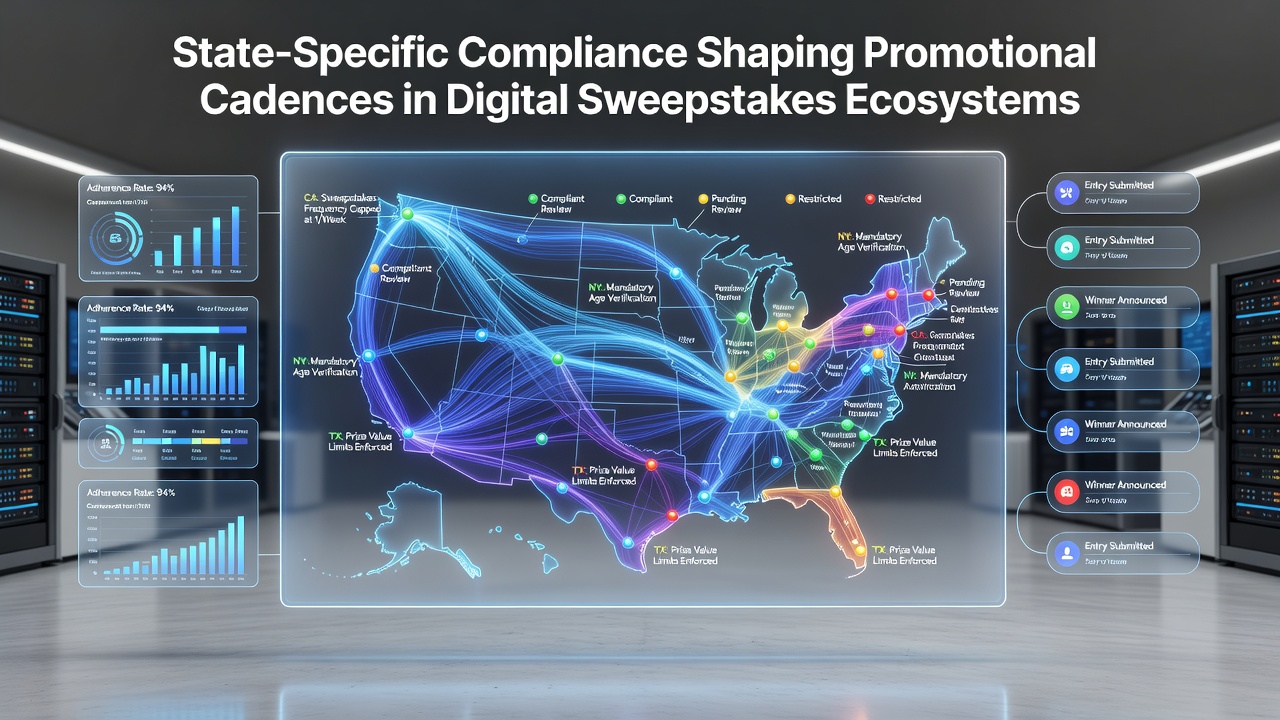
States enforce unique standards for how frequently promotions can appear in user inboxes and in-app notifications, and these rules force operators to segment their audiences by location before launching campaigns. One state might require a 48-hour cooling period between certain offers while another demands explicit opt-in confirmations for each new promotional tier, and platforms respond by building automated systems that throttle message frequency accordingly. Data indicates that such segmentation has become standard practice as operators seek to avoid penalties that range from temporary account holds to full suspension of promotional privileges.
Observers note that October 2026 brought updated reporting requirements in several states that track the velocity of free coin distributions and entry incentives, and these changes prompted many platforms to extend the intervals between large-scale giveaways in affected regions. Compliance teams now review state attorney general guidance documents on a monthly basis to recalibrate their outreach rhythms before new rules take effect.
Technical Systems Supporting Location-Based Timing
Platforms integrate geolocation checks and state-specific rule engines into their backend infrastructure so that promotional triggers activate only when user profiles match the current regulatory window for that jurisdiction. These systems log every promotional action with timestamps tied to the user's verified state of residence, creating audit trails that regulators can request during routine reviews. Experts have observed that this level of granularity reduces compliance incidents while allowing operators to maintain engagement levels that would otherwise violate stricter state standards.
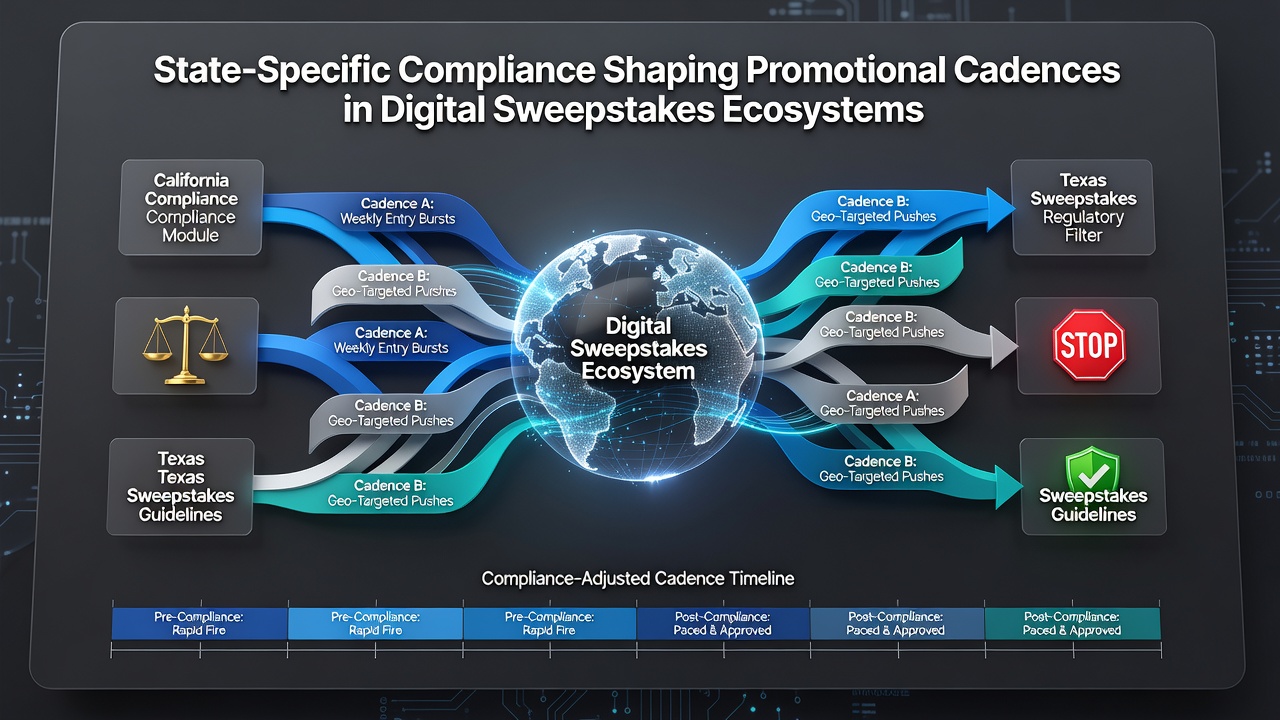
According to figures from the National Council on Problem Gambling, states with detailed disclosure timing rules report lower rates of player complaints related to promotional frequency. Platforms respond by embedding these requirements into their content management systems so that cadence changes occur automatically when a user crosses state boundaries or updates their address.
Impact on Cross-State User Journeys
Players who move between states or maintain addresses in multiple jurisdictions encounter shifting promotional patterns that reflect each location's distinct compliance framework. One study revealed that users traveling frequently receive fewer consecutive offers during periods when their current state imposes tighter spacing requirements, and this adjustment occurs without any manual intervention from the operator. The process relies on continuous address verification protocols that feed directly into promotional scheduling algorithms.
Industry reports highlight that platforms serving both high-regulation and low-regulation states maintain parallel campaign libraries, each calibrated to the narrowest acceptable cadence within that group. This approach prevents accidental violations while preserving the ability to deliver timely incentives that keep users active across different regulatory environments.
Future Developments in Cadence Management
As states continue to refine their digital sweepstakes statutes, operators anticipate further fragmentation in promotional timing rules that will require even more sophisticated compliance tooling. Data from regulatory filings shows increasing interest in real-time reporting of promotional velocity, and platforms are already piloting systems that can adjust cadence parameters within hours of a new rule announcement. Those who have studied these trends note that successful operators treat state compliance not as a static checklist but as a dynamic input that shapes every layer of their promotional architecture.
Conclusion
State-specific compliance requirements continue to define the rhythm of promotional activities across digital sweepstakes ecosystems, and operators have developed technical and procedural responses that keep campaigns aligned with each jurisdiction's evolving standards. These adaptations affect everything from message frequency to incentive sizing while maintaining operational consistency for users who interact with platforms across multiple states. The landscape remains fluid as regulatory bodies issue new guidance and platforms refine their systems to match.